
Narendra Modi Sets Record as India’s Longest-Serving Continuous Prime Minister, Sparking Nationwide Debate
By New Delhi | Bengal Times International Desk
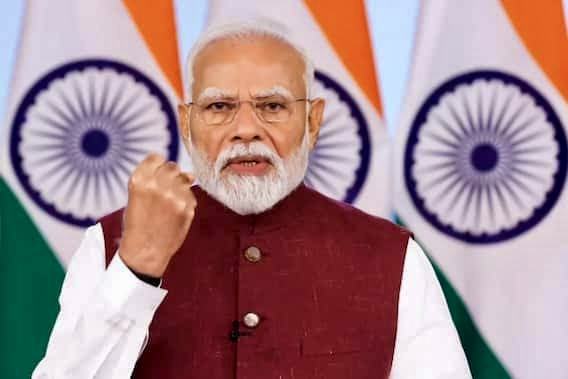
Indian Prime Minister Narendra Modi has reportedly set a new record by becoming the longest-serving continuous Prime Minister in the country’s history, surpassing the tenure record of India’s first Prime Minister, Jawaharlal Nehru. The milestone has triggered widespread discussion and mixed political reactions across India.
While the ruling party describes this achievement as a symbol of “stable leadership and sustained development,” opposition groups and political analysts are offering more critical interpretations, emphasizing democratic balance and institutional health.
🏛️ A New Chapter in Indian Political History
India’s political history has often been shaped by long-standing leadership figures, but Modi’s extended tenure marks a significant milestone in the country’s democratic journey.
According to political observers, sustained leadership of this scale can play a crucial role in ensuring policy continuity, long-term planning, and institutional stability. Over the past decade, the Modi-led government has overseen several major policy initiatives, economic reforms, and administrative restructuring efforts.
Many supporters view this continuity as a driving force behind India’s rising global profile and domestic development initiatives.
🗳️ Political Context and Continuity of Power
Narendra Modi first assumed office as Prime Minister in 2014 and has since retained power through multiple electoral victories. His leadership has strengthened the position of the Bharatiya Janata Party (BJP) as the dominant political force in Indian national politics.
Analysts note that this prolonged tenure reflects not only electoral success but also a shift toward more centralized and leadership-driven governance in India’s political structure.
However, opposition parties argue that extended periods in power can raise concerns about political competition, democratic balance, and institutional independence.
📊 Economic and Development Impact
The Modi era has been closely associated with major economic and infrastructural developments. The government highlights progress in areas such as digital infrastructure, transportation networks, foreign investment inflows, and startup ecosystem growth.
Initiatives such as digital payment systems, expanded highway networks, railway modernization, and increased global trade integration are often cited as key achievements during this period.
At the same time, critics point to ongoing challenges including unemployment, inflation pressures, and regional inequality, arguing that economic growth has not been evenly distributed across all segments of society.
🌍 International Reactions and Strategic Significance
International observers are closely watching India’s political stability and leadership continuity. Many global analysts consider India’s long-term governance stability a key factor in shaping regional geopolitics and global economic strategies.
Countries such as the United States, European Union members, and neighboring Asian states continue to engage closely with India on trade, defense, and diplomatic matters, often emphasizing policy consistency as a major advantage.
However, some observers stress that strong leadership must be balanced with robust democratic institutions and accountability mechanisms to maintain long-term political health.
⚖️ Political Debate and Reactions
The announcement of this record has triggered mixed reactions across India’s political landscape.
Supporters of the ruling BJP describe Modi’s leadership as a reflection of public trust, governance stability, and development-oriented politics. They argue that India’s improved global standing is a direct result of consistent leadership and policy continuity.
Opposition leaders, however, caution that prolonged dominance by a single leadership structure can raise concerns about democratic diversity, political competition, and institutional independence.
🧭 Expert Analysis
Political analysts suggest that Modi’s extended tenure represents more than just a personal milestone—it reflects a broader transformation in India’s political landscape.
Some experts describe it as the emergence of a “new political era” characterized by strong central leadership and streamlined decision-making processes. Others, however, warn that such concentration of power requires strong checks and balances to ensure democratic integrity.
According to analysts, the long-term impact of this leadership model will depend on how effectively India maintains institutional independence and political pluralism.
📈 Future Political Outlook
India’s political future is expected to remain highly dynamic. Key issues such as economic development, employment generation, national security, and foreign relations will continue to shape the country’s political discourse.
Analysts believe that Modi’s record-setting tenure has already set a high benchmark in Indian politics, making future leadership transitions more politically significant and competitive.
📌 Conclusion
Narendra Modi’s record as India’s longest-serving continuous Prime Minister marks a major milestone in the country’s political history. While supporters view it as a symbol of stability and development, critics raise important questions about democratic balance and institutional health.
Ultimately, the development adds a new chapter to India’s political narrative—one that is likely to influence both domestic governance and international perceptions of India for years to come.